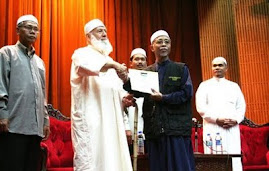
Merujuk kepada kes Muhammad Ridzuan Abdullah atau Pathmanathan a/l Krishnan dan Indira Ghandi dalam isu penjagaan tiga orang anak mereka yang berlangsung di Mahkamah Tinggi Ipoh pada hari Selasa bersamaan 5hb Mei 2009, Penulis ingin memberi beberapa pandangan yang mungkin mampu membawa pulangan yang lumayan kepada Islam itu sendiri. Secara peribadi, apabila penulis yang hadir melihat suasana dan berbual dengan barisan peguam muda yang mewakili Pertubuhan-Pertubuhan Pembela Islam (PEMBELA) banyak sekali yang masyarakat Islam perlu tahu realiti yang sebenarnya. TUG OF WAR (tarik tali) kini berlaku sekali lagi di antara pasangan suami isteri apabila salah seorangnya memeluk Islam. Tug of War yang berlaku, tentu sekali melibatkan perebutan hak jagaan anak dan hak untuk menentukan status agama anak-anak mereka yang terlibat.
Yang menjadikan isu ini semakin “panas” dan celaru ialah apabila Menteri di Jabatan Perdana Menteri, Datuk Seri Nazri Abd Aziz, menyatakan bahawa apabila salah seorang daripada suami isteri berkenaan memeluk Islam, maka anak tersebut hendaklah dibesarkan mengikut agama lazim / asal (common religion) pada waktu perkahwinan berkenaan.
Alasan yang menyebabkan keputusan ini dibuat, boleh difahami melalui kenyataan beliau seterusnya apabila beliau menyatakan bahawa “agama sepatutnya tidak dijadikan alat untuk pasangan terbabit melarikan diri daripada tanggung jawab kekeluargaan. Pemelukan ke dalam agama lain bukanlah suatu alasan untuk membubarkan sesuatu pernikahan secara automatik” (Religion should not be used as a tool to escape marriage responsibilities. Conversion is not grounds for automatic dissolution of a marriage – The Star).
Saya difahamkan bahawa keputusan ini dibuat kerana berlaku satu lagi kes yang sama melibatkan Mohd Ridzuan Abdullah dan isterinya Indra Gandhi di Perak.
Mohd Ridzuan atau Patmanathan a/l Krishnan, 40, asalnya beragama Hindu, tetapi kemudiannya memeluk Islam, dilaporkan telah menukar agama anak-anaknya iaitu Tevi Darsiny, 12, Karan Dinesh, 11, dan Prasana Diksa, setahun, kepada agama Islam pada 12 April 2009 dan telah memohon hak penjagaan anak tersebut di Mahkamah Tinggi Syariah Ipoh sedangkan isterinya (Indra Gandhi) masih lagi beragama Hindu. Adalah difahamkan pihak isterinya telah memohon bantuan campur tangan kabinet sehingga menyebabkan Datuk Seri Nazri Tan Sri Aziz mengeluarkan kenyataan tersebut.
Perlembagaan Persekutuan selaku undang-undang tertinggi negara ini dalam Perkara 12 dengan tajuk “Hak berkenaan dengan pendidikan”, memperuntukkan antara lain:-
(3) Tiada seorang pun boleh dikehendaki menerima ajaran sesuatu agama atau mengambil bahagian dalam apa-apa upacara atau upacara sembahyang sesuatu agama, selain agamanya sendiri.
(4) Bagi maksud Fasal (3) agama seseorang yang di bawah umur lapan belas tahun hendaklah ditetapkan oleh ibu atau bapanya atau penjaganya.
Maka kita dapat memahami bahawa agama seorang kanak-kanak yang berusia di bawah 18 tahun hendaklah ditentukan oleh ibu atau bapanya atau penjaganya iaitu salah seorang daripada mereka lantaran wujudnya perkataan “atau” yang memisahkan antara ketiga-tiga pihak yang disebut itu. Oleh itu, dalam kes ini, suami tersebut berhak untuk menukar agama anak-anaknya
Apabila kita melihat kepada Seksyen 95, Akta Pentadbiran Undang-Undang Islam (Wilayah-Wilayah Persekutuan) 1993 (terpakai hanya bagi Wilayah Persekutuan Kuala Lumpur dan Labuan).
Dengan tajuk “Keupayaan masuk Islam” dinyatakan seperti berikut:-
“Bagi maksud Bahagian ini, seseorang yang tidak beragama Islam boleh masuk Islam jika dia sempurna akal dan-
(a) mencapai umur lapan belas tahun; atau
(b) jika dia belum mencapai umur lapan belas tahun, ibu atau bapa atau penjaganya mengizinkan kemasukannya”
Justeru itu, kita dapat memahami bahawa ia memperuntukkan, antara lain, bahawa kanak-kanak yang belum mencapai usia 18 tahun boleh memeluk Islam jika sekiranya mendapat restu daripada salah seorang, sama ada ibu, bapa atau penjaganya.
Malah dalam kes yang menjadi “landmark” dalam menentukan siapa yang berhak menentukan agama seseorang anak iaitu kes Subashini Rajasingam lawan Saravanan Thangathoray, Mahkamah Persekutuan dengan majoriti 2-1 telah memutuskan bahawa bapa tersebut (Saravanan) mempunyai hak atau kuasa untuk menukarkan agama anaknya kepada Islam berdasarkan peruntukan Artikel 12 (4) Perlembagaan Persekutuan.
Dalam penghakiman oleh Yang Amat Arif Dato’ Bentara Istana Dato’ Nik Hashim bin Nik Ab. Rahman, Hakim Mahkamah Persekutuan, dalam kes tersebut, beliau memutuskan bahawa salah seorang daripada suami atau isteri mempunyai hak untuk menukar agama anak mereka kepada Islam. Perkataan “parent” di dalam Artikel 12 (4) Perlembagaan Persekutuan adalah bermaksud “single parent” (The word ‘parent’ in Article 12(4) of the FC, which states that the religion of a person under the age of 18 years shall be decided by his parent or guardian, means a single parent) Maksudnya, salah seorang daripada ibubapa tersebut berhak dan boleh menukarkan agama anaknya, tanpa perlu persetujuan kedua-dua ibubapa. Oleh itu, Artikel 12 (4) PP, tidak boleh dibaca sebagai memberikan hak memilih agama anak kepada kedua-dua ibubapa sebaliknya memadai salah seorang daripada mereka.
Jika kita mencari fatwa ulama’ pula, saya mendapati terdapat fatwa daripada “Lajnah Da’imah Lil Buhuth Al-‘Ilmiyyah wa Al-Ifta” (m/s 195) yang dianggotai oleh Sheikh Abdul Aziz Bin Abdullah Bin Baz, Sheikh Abdul Razzaq Afifi dan Sheikh Abdullah Bin Ghadyan, yang memutuskan bahawa seorang wanita yang telah memeluk Islam lebih berhak terhadap hadhanah (hak jagaan) anak beliau berbanding suaminya yang beragama Kristian, selagi mana wanita itu kekal sebagai Islam dan suaminya berterusan sebagai Kristian. Dan anak tersebut dihukum sebagai beragama Islam kerana mengikut agama ibunya. Ini disebabkan seorang yang bukan Islam (kafir) tidak boleh menguasai orang Islam berdasarkan dalil Al-Quran, Surah Al-Nisaa’, ayat 141:-
Maksudnya; “dan Allah tidak sekali-kali akan memberi jalan kepada orang-orang kafir untuk membinasakan orang-orang yang beriman”
Namun begitu, mungkin golongan bukan Islam akan bertanya, apakah Islam suatu agama yang langsung tidak memberi peluang kepada mereka untuk menjaga dan seterusnya mencurahkan kasih sayang kepada anak-anak mereka?
Sebenarnya, di kalangan fuqaha Islam, golongan ulama mazhab Shafie dan Hanbali yang mensyaratkan hadhanah diberikan kepada ibubapa / penjaga yang beragama Islam, manakala ulama mazhab Hanafi dan Maliki membenarkan hadhanah diberikan kepada ibu atau bapa yang bukan beragama Islam tanpa mengira mereka ahlil kitab atau tidak.
Dalil yang dipegang oleh ulama’ yang membenarkan hadhanah kepada golongan bukan Islam ialah sebagaimana hadith yang diriwayatkan oleh Imam Abu Daud dan lain-lain (lihat Al-Fiqh Al-Islami wa Adillatuhu, Dar Al-Fikr, Juzuk 7, m/s 727) , berkenaan seorang kanak-kanak yang disuruh memilih antara bapanya yang muslim atau ibunya yang musyrik, sedangkan dia cenderung kepada ibunya yang musyrik. Maka berdoalah Nabi SAW agar Allah SWT memberi petunjuk kepadanya, lalu hati kanak-kanak itu berubah dan memilih bapanya yang muslim. Tetapi hadith ini ditolak oleh Sheikh Dr Wahbah Az-Zuhaili dengan mengatakan bahawa ianya mansukh (dibatalkan) berdasarkan doa Nabi SAW tersebut.
Berdasarkan alasan-alasan tersebut, saya percaya bahawa pentas terbaik untuk menyelesaikan kekusutan ini ialah mahkamah syariah dan biarlah mahkamah syariah yang akan menyiasat dan membicarakan isu hadhanah ini untuk kemaslahatan anak tersebut. Perbicaraan di mahkamah syariah tidaklah bermakna bahawa pintu hadhanah “terkunci mati” kepada ibu atau bapa yang bukan beragama Islam kerana masih terdapat banyak pandangan fuqaha yang masih memberi ruang kepada mereka, kerana isu utamanya ialah kemaslahatan anak dan bukannya kemaslahatan ayah atau ibu!
Sebenarnya, alangkah hebatnya sokongan padu yang diterima oleh Indira Ghandi daripada keluarga, sahabat handai yang berlainan bangsa termasuk dua orang tokoh politik Democratic Action Party (DAP) iaitu Yang Berhormat Kulasegaran (juga sebagai peguam Indira Ghandi) dan Sivanesan yang begitu komited dari awal pagi sehingga petang berada bersama-sama mengikuti perjalanan kes. Dalam hal ini semua pihak menyokong keputusan yang menetapkan anak-anak kekal menganut agama asal ibu bapa masing-masing walaupun ibu atau bapa mereka kemudiannya memeluk agama lain. Dalam perbezaan aliran politik, parti politik DAP, Malaysia Chinese Association (MCA), Malaysian Indian Congress (MIC), dan GERAKAN dan mungkin banyak lagi nampaknya bersama bersepakat dalam isu ini. Nampaknya tidak timbul musuh politik di kalangan mereka. Malah ada beberapa pemimpin utama dari parti berkenaan yang telah pun membuat kenyataan akhbar. Disinilah penulis ingin membangkitkan persoalan penting yang menyangkut isu perpaduan umat.
Pertama, alangkah baiknya sekiranya semua pihak sama ada badan bukan kerajaan atau NGO Islam yang ada turun padang memberi sokongan moral kepada barisan Peguam muda PEMBELA yang mencurah keringat tanpa bayaran yang tinggi. Meraka khabarnya menggunakan kekuatan kewangan sendiri yang agak terhad. Malah yang lebih penting sekali adalah kehadiran tokoh-tokoh politik setempat yang beragama Islam seperti dari United Malays National Organizatian (UMNO), Parti Islam Semalaysia (PAS) dan Parti Keadilan Rakyat (PKR) untuk turun sama membawa panji-panji agama Islam itu sendiri. Tunjukkan kita tidak ada kompromi dalam mempertahankan Islam. Inilah masa yang sangat baik untuk mengangkat kekuatan Islam dan mewujudkan kebersamaan yang tidak berbelah bahagi untuk Islam. Tiada siapa pun yang rugi yang pasti Islam akan mendapat untung. Perbezaan dari sudut pendekatan ideologi dan pengaruh politik parti yang terasnya Melayu dan Islam sepatutnya tidak menghalang untuk bersama dalam hal yang bersangkut dalam hal agama Islam itu sendiri.
Kedua, untuk maklumat semua pihak, barisan peguam muda PEMBELA ini sedikit rasa kecewa yang bukan sahaja dalam hal kuantiti kehadiran sokongan yang kurang, tetapi semacam masyarakat Islam tidak ambil peduli dengan isu yang sensitif dengan agama Islam itu sendiri. Untuk maklumat semua pihak, isu ini hangat dimainkan oleh akhbar arus perdana masyarakat Cina dan India. Dengan itu penulis mewakili Agkatan Belia Islam Malaysia (ABIM) Cawangan Perak ingin menyeru agar semua pihak ambil peduli dan tunjukkan sokongan yang kuat untuk kes yang disambung pada hari KHAMIS bersamaan pada tarikh 14hb Mei 2009. Sebagai seorang mukmin kita yakin dengan ketentuan ilahi dan apa yang berlaku sebenarnya tersembunyi hikmah yang besar, yang hanya Allah sahaja yang Maha Mengetahuinya.
Friday, May 8, 2009

Tuesday, May 5, 2009
BERSAMA DALAM MENANGANI ISU AGAMA
Merujuk kepada kes Muhammad Ridzuan Abdullah atau Pathmanathan a/l Krishnan dan Indira Ghandi dalam isu penjagaan tiga orang anak mereka yang berlangsung di Mahkamah Tinggi Ipoh pada hari Selasa bersamaan 5hb Mei 2009, Penulis ingin memberi beberapa pandangan yang mungkin mampu membawa pulangan yang lumayan kepada Islam itu sendiri. Secara peribadi, apabila penulis yang hadir melihat suasana dan berbual dengan barisan peguam muda yang mewakili Pertubuhan-Pertubuhan Pembela Islam (PEMBELA) banyak sekali yang masyarakat Islam perlu tahu realiti yang sebenarnya.
Sebenarnya, alangkah hebatnya sokongan padu yang diterima oleh Indira Ghandi daripada keluarga, sahabat handai yang berlainan bangsa termasuk dua orang tokoh politik Democratic Action Party (DAP) iaitu Yang Berhormat Kulasegaran dan Sivanesan yang begitu komited dari awal pagi sehingga petang berada bersama-sama mengikuti perjalanan kes. Dalam hal ini semua pihak menyokong keputusan yang menetapkan anak-anak kekal menganut agama asal ibu bapa masing-masing walaupun ibu atau bapa mereka kemudiannya memeluk agama lain. Dalam perbezaan aliran politik, parti politik DAP, Malaysia Chinese Association (MCA), Malaysian Indian Congress (MIC), dan GERAKAN dan mungkin banyak lagi nampaknya bersama bersepakat dalam isu ini. Nampaknya tidak timbul musuh politik di kalangan mereka. Malah ada beberapa pemimpin utama dari parti berkenaan yang telah pun membuat kenyataan akhbar. Disinilah penulis ingin membangkitkan persoalan penting yang menyangkut isu perpaduan umat.
Pertama, alangkah baiknya sekiranya semua pihak sama ada badan bukan kerajaan atau NGO Islam yang ada turun padang memberi sokongan moral kepada barisan Peguam muda PEMBELA yang mencurah keringat tanpa bayaran yang tinggi. Meraka khabarnya menggunakan kekuatan kewangan sendiri yang agak terhad. Malah yang lebih penting sekali adalah kehadiran tokoh-tokoh politik setempat yang beragama Islam dari United Malays National Organizatian (UMNO), Parti Islam Semalaysia (PAS) dan Parti Keadilan Rakyat (PKR) untuk turun sama membawa panji-panji agama Islam itu sendiri. Tunjukkan kita tidak ada kompromi dalam mempertahankan Islam. Inilah masa yang sangat baik untuk mengangkat kekuatan Islam dan mewujudkan kebersamaan yang tidak berbelah bahagi untuk Islam. Tiada siapa pun yang rugi yang pasti Islam akan mendapat untung. Perbezaan dari sudut pendekatan ideologi dan pengaruh politik parti yang terasnya Melayu dan Islam sepatutnya tidak menghalang untuk bersama dalam hal yang bersangkut dalam hal agama Islam itu sendiri.
Kedua, untuk maklumat semua pihak, barisan peguam muda PEMBELA ini sedikit rasa kecewa yang bukan sahaja dalam hal kuantiti kehadiran sokongan yang kurang, tetapi semacam masyarakat Islam tidak ambil peduli dengan isu yang sensitif dengan agama Islam itu sendiri. Untuk maklumat semua pihak, isu ini hangat dimainkan oleh akhbar arus perdana masyarakat Cina dan India. Dengan itu penulis mewakili Agkatan Belia Islam Malaysia (ABIM) Cawangan Perak ingin menyeru agar semua pihak ambil peduli dan tunjukkan sokongan yang kuat untuk kes yang disambung pada hari Selasa bersamaan pada tarikh 12hb Mei 2009. Sebagai seorang mukmin kita yakin dengan ketentuan ilahi dan apa yang berlaku sebenarnya tersembunyi hikmah yang besar, yang hanya Allah sahaja yang Maha Mengetahuinya.
Friday, March 27, 2009
Understanding Politics In Islam: Fiqh al Siyasah
Adapted and rearranged from the book Fiqh al-Dawlah written by Professor Yusuf al Qaradawi.
1. What is the aim of politics in Islam?
According to Al-Mawardi from his book Al-Ahkam Al-Sultaniyyah, it is hirasatud din wa siasatud dunya - to uphold the religion and administer the world. Politics is not munkar - is not a depravity - real politics is noble virtuous because it administers the affairs of all creatures, bringing man closer to good and away from fasad - evil. According to Ibn al-Qayyim, politics is really the justice of Allah the Almighty and His Prophet (peace and the blessings of Allah be upon him).
The Prophet Muhammad s.a.w. was a politician as well as the messenger conveying the risalah, murabbi - teacher, Qadi - Chief Justice, Head of the nation and Imam of the ummah. The Khulafa' al Rasyidun - the rightly guided leaders who succeeded him were also politicians following the Sunnah - way of the Prophet, establishing just administration, practising ihsan - the betterment of good and providing the leadership of 'ilm - knowledge and Iman - belief.
However in the present time, due to 'politics' man faced suffering as a result of deceit and political ploys and scheming and devious politicians, whether in the form of past colonialists, treacherous rulers, tyrannical leaders and regimes preaching Machiavellian philosophy (the ends justifies the means!).
It became common to label and describe committed Muslims as 'political' so that they are regarded warily and wickedly for the purpose of disassociating and furthering apart the people from them, intending that society will shun and hate what is called 'political Islam'. It has been such that symbols of Islam like the headscarf, the proper attire and congregational prayers - Salat jama'ah are attempted to be labelled 'political'.
It is a blatant lie for those who say that there is no religion in politics and that there is no politics in religion. This deceit was once tried in the form of an attempted fatwa - a decree while the members of the Ikhwan al-Muslimun were imprisoned in the detention camps in Egypt in the 50's. The regime wanted to influence the masses to regard the activists and the Dai' (the very people who wanted to uphold the Syari'ah, Al-Qur'an and Al-Sunnah) as the purveyors of fasad - evil by using corrupted 'ulama - paid scholars.
2. The Fight against Fasad and Zulm (Evil, Transgression and Tyranny) is the utmost in Jihad
From the understanding of the Prophet's tradition (mafhum hadith):
Munkar (transgression) is not limited to khamr - liqour, gambling and zina - - unlawful sex but degrading and defiling the honour and dignity of the people and citizens is a major transgression, so is cheating in the elections, refusing to give testimony - neglecting to vote, letting government be in the hands of those who are not deserving and undesired, stealing and squandering the nation's wealth and property, monopolising the people's needs for personal gains or cronies' interests, detaining people without crime or just cause, without judgement from a fair court, torturing human beings in prison and the detention camps, giving, accepting and mediating in bribes, cowering up to, praising evil rulers, allowing the enemies of Allah and the enemies of the Muslim community to be leaders and shunning the believers - the mu'min.
These are all grave transgressions!
When a Muslim remains quiet upon seeing all of these it means that he or she does not deserve to live (is not alive) from the mafhum of al-ayat and al-hadith.
Islam requires that every Muslim has political responsibility. A Muslim is required by his Iman - faith to be truly concerned with the affairs and problems of the ummah - community, helping and defending the meek and the weak, fighting tyranny and oppression. By retreating and abstaining oneself, it will only invite divine retribution and being seized by the flames of hell (mafhum ayat).
3. Political Freedom is Our Utmost Need Today
Islam is always rejuvenated, its message spread across, its resurgence, its reverberating call heard by all even if it is given some limited freedom. Therefore the first battle is to obtain freedom to deliver the message of da'wah, the risalah of tawhid (Unity of God), spread consciousness and enabling the existence of Islamic movements.
True democracy is not the whims and desires of the tyrannical rulers or their cronies, it is not the place to jail and incarcerate its fighters and not the place to torture its proponents.
Democracy is the simplest and proper way to achieve the aims of a noble life, to be able to invite all to Allah and Islam, to be able to call others to Iman without having our souls being imprisoned and our bodies sentenced to be executed by hanging. It is the space for a free and honourable nation to have the right to choose, evaluate the ruler, change governments without coups and without bloodshed.
The theory, way and system which looks alien maybe adopted if it benefits us and as long as it does not contradict clear Islamic edicts and the rules of Syariah. We appraise, amend according to our spirit, we do not adopt its philosophy, and we do not allow what is forbidden and vice versa. We do not relinquish or compromise what is ordained or compulsory - the wajib in Islam.
The gist of democracy is that the public, the people can choose the rulers who are going to administer them; the people having the right to select, criticise and terminate; and the people are not forced to accept systems, trends, and policies which they do not agree to and they are not abused. They are free to hold elections, referendums, ensuring majority rights, protecting minority rights, having opposition, have multi parties, have press freedom and safeguarding the independence of the judiciary. But once again to constantly uphold and safeguard the principles of Islam, the firm rulings, the al-thawabit: the determined laws - hukm qat'i, the daruri - the essentials of religion and the non-ijtihadiy must not be compromised or neglected.
Syura:
Syura or consultative decision making must be followed and not just as a debating factor. By practising syura, it is closer, hence even better than the spirit of democracy. It is but the lost jewel found, the lost wisdom - al-hikmah which has been rediscovered.
Syura enables musyawarah to be conducted, obtains views and opinions, becomes the responsibility of the people to advise and counsel the government (ad-dinu nasiha) and establish amar ma'ruf nahy munkar - enjoining good and forbidding evil. Among the obligations of amar ma'ruf nahy munkar is the highest jihad (struggle) that is to voice out the truth in front of the unjust tyrant.
The State of Politics in the Ummah:
The musibah or calamity of the ummah then and now is the absence and the abeyying of the system of syura and the adoption of an oppressive dynastical ruling system. In the modern era, dictators stay in power by the force of arms and gold - power and wealth resulting in the syariah being hindered, secularism being forced upon and cultural Westernisation being imposed. Islamic da'wah and the Islamic movement being victimised, brutalised, imprisoned and hounded viciously.
4. Qur'anic Examples of Tyrannical Rulers
The Al-Qur'an denounces all powerful rulers such as Namrud, Fir'aun (Pharaoh), Hamaan and Qarun. Namrud is taghut - the transgressor who enslaves the servants of Allah as his serfs.
There is the pact or collaboration of three parties:
Fir'aun - he claims to be God, carries out tyranny and oppression throughout the land, enslaves the people
Hamaan - the cunning politician, experienced, having self interest, in the service of taghut, propping up and supporting Fir'aun and cheating the people, subjugating them.
Qarun - the capitalist or feudalist who takes opportunity from the unjust and oppressive laws, spending fortunes for the tyrannical leader in order to profit and amass more vast returns, bleeding and exploiting the toils of the people. The origin of Qarun was that he came from Prophet Musa's own clan who colluded with Fir'aun due to the love of worldly life and materialism.
The combination of taghut and Zulm results in the spread of mayhem and the destruction of the community, subjugating man by force and degradation.
The People:
Al Qur'an denounces the people or citizens who are obedient and loyal to their oppressive rulers. The people who remain under the tutelage of taghut are fully responsible and accountable because it is due to their attitude that brought forth these fir'auns and taghuts.
Al-Junud (the collaborators):
These are the armies and enforcers of the rule and order of the taghut. They use force, fear and repression to eliminate and subdue all opposition and dissidents of the tyrant.
5. An Example of Leadership
Balqis, the Queen of Saba' as told in the Qur'an was a woman who lead her people well, just and administered them with intelligence and wisdom saving her people from a war that was destructive and made decisions by syura-consulting them. Alas, the story ended with the acceptance of Islam. She led her people towards the goodness of the world and the hereafter.
Leaders like her are much more capable and qualified with political acumen and wise administration than most of the present Arab and Muslim 'male' leaders. (Prof. Yusuf Qaradawi purposely avoided the term 'al-rijal')
6. Pluralism and Multi Parties in Islam
The existence of various parties or movements is not forbidden as long as unification is not achievable due to differences over objectives, approaches, understanding and the level of confidence and trust. Variety and specialisation are allowed as long as they do not become contradictory and confrontational. However everyone has to be in one united front when facing the challenges to aqidah - belief, syariah, ummah and the survival of Islam. Relations between parties and groupings should be in the atmosphere of non-prejudice, forgiveness, nobleness, counselling truth and steadfastness, wisdom and engaging in healthy cordial debate.
Even when the Islamic State is established there is no reason to feel distraught at the existence of pluralism and differences.
7. Counselling and Corrective Participation in Politics
Without the shedding of blood, the most effective way as the outcome of long and painful struggles is the existence of political forces which the government in power is unable to contain or eliminate: that is presence of political parties. The ruling regime can get rid of individuals and small groups of opponents but it is difficult for them to defeat or wipe out larger organisations which are well structured, organised and rooted in the masses of society. Political parties have the platform, machinery, newspapers and publications as well as mass influence.
Political parties or political movements are necessary to fight oppression, to enable criticism, bringing back the government to to uphold truth and justice, bringing down or changing the government. These parties are capable of monitoring and appraising the government, offer advice and criticism.
8. Voting
Voting in the elections is a form of testimony. A just testimony is considered as long as one is not convicted of crime. Whoever so votes or abstains from voting in the general elections causing the defeat of a trustworthy and deserving candidate but on the other hand allows the candidate who is less trustworthy and undeserving to win, one has gone against the command of Allah concerning giving testimony.
Wallahu'alam
1. What is the aim of politics in Islam?
According to Al-Mawardi from his book Al-Ahkam Al-Sultaniyyah, it is hirasatud din wa siasatud dunya - to uphold the religion and administer the world. Politics is not munkar - is not a depravity - real politics is noble virtuous because it administers the affairs of all creatures, bringing man closer to good and away from fasad - evil. According to Ibn al-Qayyim, politics is really the justice of Allah the Almighty and His Prophet (peace and the blessings of Allah be upon him).
The Prophet Muhammad s.a.w. was a politician as well as the messenger conveying the risalah, murabbi - teacher, Qadi - Chief Justice, Head of the nation and Imam of the ummah. The Khulafa' al Rasyidun - the rightly guided leaders who succeeded him were also politicians following the Sunnah - way of the Prophet, establishing just administration, practising ihsan - the betterment of good and providing the leadership of 'ilm - knowledge and Iman - belief.
However in the present time, due to 'politics' man faced suffering as a result of deceit and political ploys and scheming and devious politicians, whether in the form of past colonialists, treacherous rulers, tyrannical leaders and regimes preaching Machiavellian philosophy (the ends justifies the means!).
It became common to label and describe committed Muslims as 'political' so that they are regarded warily and wickedly for the purpose of disassociating and furthering apart the people from them, intending that society will shun and hate what is called 'political Islam'. It has been such that symbols of Islam like the headscarf, the proper attire and congregational prayers - Salat jama'ah are attempted to be labelled 'political'.
It is a blatant lie for those who say that there is no religion in politics and that there is no politics in religion. This deceit was once tried in the form of an attempted fatwa - a decree while the members of the Ikhwan al-Muslimun were imprisoned in the detention camps in Egypt in the 50's. The regime wanted to influence the masses to regard the activists and the Dai' (the very people who wanted to uphold the Syari'ah, Al-Qur'an and Al-Sunnah) as the purveyors of fasad - evil by using corrupted 'ulama - paid scholars.
2. The Fight against Fasad and Zulm (Evil, Transgression and Tyranny) is the utmost in Jihad
From the understanding of the Prophet's tradition (mafhum hadith):
Munkar (transgression) is not limited to khamr - liqour, gambling and zina - - unlawful sex but degrading and defiling the honour and dignity of the people and citizens is a major transgression, so is cheating in the elections, refusing to give testimony - neglecting to vote, letting government be in the hands of those who are not deserving and undesired, stealing and squandering the nation's wealth and property, monopolising the people's needs for personal gains or cronies' interests, detaining people without crime or just cause, without judgement from a fair court, torturing human beings in prison and the detention camps, giving, accepting and mediating in bribes, cowering up to, praising evil rulers, allowing the enemies of Allah and the enemies of the Muslim community to be leaders and shunning the believers - the mu'min.
These are all grave transgressions!
When a Muslim remains quiet upon seeing all of these it means that he or she does not deserve to live (is not alive) from the mafhum of al-ayat and al-hadith.
Islam requires that every Muslim has political responsibility. A Muslim is required by his Iman - faith to be truly concerned with the affairs and problems of the ummah - community, helping and defending the meek and the weak, fighting tyranny and oppression. By retreating and abstaining oneself, it will only invite divine retribution and being seized by the flames of hell (mafhum ayat).
3. Political Freedom is Our Utmost Need Today
Islam is always rejuvenated, its message spread across, its resurgence, its reverberating call heard by all even if it is given some limited freedom. Therefore the first battle is to obtain freedom to deliver the message of da'wah, the risalah of tawhid (Unity of God), spread consciousness and enabling the existence of Islamic movements.
True democracy is not the whims and desires of the tyrannical rulers or their cronies, it is not the place to jail and incarcerate its fighters and not the place to torture its proponents.
Democracy is the simplest and proper way to achieve the aims of a noble life, to be able to invite all to Allah and Islam, to be able to call others to Iman without having our souls being imprisoned and our bodies sentenced to be executed by hanging. It is the space for a free and honourable nation to have the right to choose, evaluate the ruler, change governments without coups and without bloodshed.
The theory, way and system which looks alien maybe adopted if it benefits us and as long as it does not contradict clear Islamic edicts and the rules of Syariah. We appraise, amend according to our spirit, we do not adopt its philosophy, and we do not allow what is forbidden and vice versa. We do not relinquish or compromise what is ordained or compulsory - the wajib in Islam.
The gist of democracy is that the public, the people can choose the rulers who are going to administer them; the people having the right to select, criticise and terminate; and the people are not forced to accept systems, trends, and policies which they do not agree to and they are not abused. They are free to hold elections, referendums, ensuring majority rights, protecting minority rights, having opposition, have multi parties, have press freedom and safeguarding the independence of the judiciary. But once again to constantly uphold and safeguard the principles of Islam, the firm rulings, the al-thawabit: the determined laws - hukm qat'i, the daruri - the essentials of religion and the non-ijtihadiy must not be compromised or neglected.
Syura:
Syura or consultative decision making must be followed and not just as a debating factor. By practising syura, it is closer, hence even better than the spirit of democracy. It is but the lost jewel found, the lost wisdom - al-hikmah which has been rediscovered.
Syura enables musyawarah to be conducted, obtains views and opinions, becomes the responsibility of the people to advise and counsel the government (ad-dinu nasiha) and establish amar ma'ruf nahy munkar - enjoining good and forbidding evil. Among the obligations of amar ma'ruf nahy munkar is the highest jihad (struggle) that is to voice out the truth in front of the unjust tyrant.
The State of Politics in the Ummah:
The musibah or calamity of the ummah then and now is the absence and the abeyying of the system of syura and the adoption of an oppressive dynastical ruling system. In the modern era, dictators stay in power by the force of arms and gold - power and wealth resulting in the syariah being hindered, secularism being forced upon and cultural Westernisation being imposed. Islamic da'wah and the Islamic movement being victimised, brutalised, imprisoned and hounded viciously.
4. Qur'anic Examples of Tyrannical Rulers
The Al-Qur'an denounces all powerful rulers such as Namrud, Fir'aun (Pharaoh), Hamaan and Qarun. Namrud is taghut - the transgressor who enslaves the servants of Allah as his serfs.
There is the pact or collaboration of three parties:
Fir'aun - he claims to be God, carries out tyranny and oppression throughout the land, enslaves the people
Hamaan - the cunning politician, experienced, having self interest, in the service of taghut, propping up and supporting Fir'aun and cheating the people, subjugating them.
Qarun - the capitalist or feudalist who takes opportunity from the unjust and oppressive laws, spending fortunes for the tyrannical leader in order to profit and amass more vast returns, bleeding and exploiting the toils of the people. The origin of Qarun was that he came from Prophet Musa's own clan who colluded with Fir'aun due to the love of worldly life and materialism.
The combination of taghut and Zulm results in the spread of mayhem and the destruction of the community, subjugating man by force and degradation.
The People:
Al Qur'an denounces the people or citizens who are obedient and loyal to their oppressive rulers. The people who remain under the tutelage of taghut are fully responsible and accountable because it is due to their attitude that brought forth these fir'auns and taghuts.
Al-Junud (the collaborators):
These are the armies and enforcers of the rule and order of the taghut. They use force, fear and repression to eliminate and subdue all opposition and dissidents of the tyrant.
5. An Example of Leadership
Balqis, the Queen of Saba' as told in the Qur'an was a woman who lead her people well, just and administered them with intelligence and wisdom saving her people from a war that was destructive and made decisions by syura-consulting them. Alas, the story ended with the acceptance of Islam. She led her people towards the goodness of the world and the hereafter.
Leaders like her are much more capable and qualified with political acumen and wise administration than most of the present Arab and Muslim 'male' leaders. (Prof. Yusuf Qaradawi purposely avoided the term 'al-rijal')
6. Pluralism and Multi Parties in Islam
The existence of various parties or movements is not forbidden as long as unification is not achievable due to differences over objectives, approaches, understanding and the level of confidence and trust. Variety and specialisation are allowed as long as they do not become contradictory and confrontational. However everyone has to be in one united front when facing the challenges to aqidah - belief, syariah, ummah and the survival of Islam. Relations between parties and groupings should be in the atmosphere of non-prejudice, forgiveness, nobleness, counselling truth and steadfastness, wisdom and engaging in healthy cordial debate.
Even when the Islamic State is established there is no reason to feel distraught at the existence of pluralism and differences.
7. Counselling and Corrective Participation in Politics
Without the shedding of blood, the most effective way as the outcome of long and painful struggles is the existence of political forces which the government in power is unable to contain or eliminate: that is presence of political parties. The ruling regime can get rid of individuals and small groups of opponents but it is difficult for them to defeat or wipe out larger organisations which are well structured, organised and rooted in the masses of society. Political parties have the platform, machinery, newspapers and publications as well as mass influence.
Political parties or political movements are necessary to fight oppression, to enable criticism, bringing back the government to to uphold truth and justice, bringing down or changing the government. These parties are capable of monitoring and appraising the government, offer advice and criticism.
8. Voting
Voting in the elections is a form of testimony. A just testimony is considered as long as one is not convicted of crime. Whoever so votes or abstains from voting in the general elections causing the defeat of a trustworthy and deserving candidate but on the other hand allows the candidate who is less trustworthy and undeserving to win, one has gone against the command of Allah concerning giving testimony.
Wallahu'alam
Wednesday, March 25, 2009
Parlimen Bukit Gantang Penanda Aras Dakwah Dijalur Politik Perak
Assalamualaikum. Syukur ke hadrat Allah SWT ketika ini kita masih menikmati nikmat Islam dan Iman. Perkembangan politik Perak sangat penting dalam pelbagai konteks termasuk urusan dakwah. Pertemuan pimpinan ABIM Perak bersama pimpinan Jemaah Islam Malaysia (JIM) cawangan Perak secara tidak rasmi membawa banyak kebersamaan pendapat. Perkara besar yang sama dari sudut pandangan ialah perjalanan urusan dakwah khususnya di negeri Perak. Semangat dan mood secara menyeluruh generasi muda rakyat perak tidak kira agama, bangsa, dan negara jelas lebih terarah untuk mengikuti perkembangan politik semasa. Amat besar kesannya terhadap kesuburan dakwah secara tersusun apabila suasana politik negeri Perak berada di dalam suasana yang amat buruk dalam sejarah negara. Bagi saya apabila ada pihak yang menangguk di air keruh dan mengheret institusi Sultan ke kancah politik, ini akan banyak memberi kesan yang besar terhadap Islam itu sendiri. Kita terpaksa akui, kini banyak pihak yang secara terang-terang membela atau menghina semua Institusi penting umat Melayu Islam yang kita sedia maklum. Apabila berlaku pilihanraya peringkat Parlimen Bukit Gantang berlaku, secara umumnya ini adalah peluang dan kesempatan semua pihak yang terlibat dan yang berminat membuktikan sesuatu. Sangat menyedihkan apabila tersebar berita bahawa sudah ada pihak-pihak tertentu yang mengedarkan gambar yang menghina peribadi tertentu dikhalayak umum. ABIM Perak khususnya membantah dan sangat kecewa dan menyarankan agar pihak berkuasa menjalankan siasatan segera ke atas isu. Jika benar inilah antara kesan yang sangat jelek dn hina oleh pihak yang rakus yang menggunakan kalimah "The ends justified means" Nicolo Machiavelli. Urusan politik kini perlu menjadi sebahagian daripada urusan umat. Jangan diabaikan ! Berjuanglah wahai pihak yang benar dengan usaha yang gigih, bersungguh-sungguh dan bertawakal ke hadrat ilahi untuk kemenangan ! Pilihlah susuk tubuh peribadi Muslim yang yang tulen. Pastikan kemenangan " Syakhsiyatul Muslimil Mu'aashir". Sesungguhnya kita sebagai mukmin yakin bahawa tugas kepimpinan perlu diamanahkan kepada mereka yang telah jelas terbukti menonjolkan kewibawaan sebagai seorang mukmin yang utuh di dalam kepimpinan. Yakinlah dengan kebenaran firman Allah SWT:
"Dan Kami hendak berihsan Dengan memberikan pertolongan kepada kaum Yang tertindas di negeri itu, dan hendak menjadikan mereka pemimpin-pemimpin, serta hendak menjadikan mereka orang-orang Yang mewarisi (Apa Yang dimiliki oleh Firaun dan kaumnya)".
(Al-Qashash: 5)
Wallahu'alam
Wednesday, January 7, 2009
Akhbar Harold Perlu Akur
Angkatan Belia Islam Malaysia (ABIM) Caw. Perak ingin merakamkan ucapan tahniah atas keputusan Kementerian Dalam Negeri (KDN) yang menggantungkan penerbitan edisi Bahasa Malaysia akhbar Katolik Herald minggu lalu. ABIM menyokong penuh atas pergantungan tersebut atas kemaslahatan umat Islam dan Perlembagaan Negara. Pandangan Pemuda Majlis Gereja Malaysia (PMGM) yang mengatakan seolah-olah tidak menggalakkan mereka menggunakan bahasa kebangsaan, adalah satu pandangan yang penuh curiga. Penggunaan Bahasa Melayu dalam penerbitan edisi akhbar Katolik Herald minggu lalu jelas menggambarkan suatu usaha untuk menyebarkan dakyah kristianisasi kepada umat Melayu. Ini jelas bertentangan dengan kandungan perlembagaan bahawa agama Islam itu adalah agama rasmi dan adalah salah mana-mana pihak yang cuba menyebarkan fahaman yang bertentangan dengan agama Islam terhadap orang Islam. Sekiranya akhbar ini dibenarkan, adalah tidak mustahil selepas ini akan ada percubaan sesetengah pihak yang akan menerbitkan pula kitab-kitab peganggan agama lain kepada Bahasa Melayu. ABIM begitu curiga dengan kenyataan setiausaha PMGM Daniel Chai "Bukankah orang beragama Kristian di negara ini juga warganegara yang berhak dan patut digalak menggunakan bahasa kebangsaannya dalam segala urusan hariannya? Kita perlu fahami penggunaan Bahasa Kebangsaan dalam urusan harian adalah amat digalakan tetapi bukan dalam urusan penyebaran dakyah kepercayaan, Seruan pemimpin negara agar rakyat Malaysia berbahasa Malaysia tidak seharusnya disalah ertikan atau dijadikan alasan untuk melaksanakan hal berkaitan. Tidak timbul juga persoalan yang mengatakan bahawa larangan kementerian sebagai "penindasan atau diskriminasi terhadap penganut Kristian yang berbahasa dan berbangsa Malaysia". Penganut Kristian di negara ini bebas dalam mengamalkan kepercayaan sehinggakan sambuatan kebesaran juga mendapat ruang yang sama untuk diraikan tanpa sekatan oleh pihak kerajaan. Malah medium hiburan juga sarat dengan program yang cenderung kepada penganut Krsitian ketika sambutan kebesaran penganut Kristian. Negara Malaysia kini tidak boleh disamakan dengan negara lain yang kononnya penggunaan kalimah Allah turut digunakan oleh penganut Kristian selama beberapa generasi, khususnya di Malaysia Timur, seperti istilah "Allah" yang digunakan di kalangan mereka di negara-negara Arab dan Indonesia. Banyak perbezaan terutamanya peruntukan perlembagaan yang menekan Islam perlu dipelihara dan tidak boleh umat Islam dimurtadkan. Ini membuktikan bahawa pemerintah di negara ini mempunyai kesedaran untuk menjaga Aqidah umat Melayu Islam yang kini semakin terancam. Adalah tidak benar dan salah bahawa negara ini membenarkan umat Melayu Islam diajak untuk menukar agama semata-mata kenyataan yang mengatakan Negara mengamalkan kebebasan beragama. Akhir kata ABIM sekali menegaskan bahawa tindakan yang dilakukan oleh pihak KDN adalah tepat pada masanya sekaligus sebagai satu amaran kepada usaha pihak lain untuk melakukan perkara yang sama. ABIM mengharapkan tindakan tegas ini perlu diteruskan dalam konteks menjaga agama Islam sebagai agama rasmi negara Malaysia. |
Monday, October 27, 2008
ABIM: Sebuah Gerakan Islam, Bukannya Gerakan Belia Semata-mata
| Maksud Gerakan Islam Menurut Dr. Yusuf Al-Qardhawi, Gerakan Islam ialah segala aktiviti rakyat atau masayarakat yang bersifat bersama (jamaah) dan terorganisasi, yang berkeupayaan mengembalikan Islam kembali memimpin masyarakat dan menjadikan Islam sebagai cara hidup dalam semua aspek.[1] Aktiviti yang berkesinambungan adalah intipati penting dan utama bagi sebuah Gerakan Islam. Beliau juga menambah bahawa aktiviti yang dimaksudkan tidak hanya dengan aktiviti ceramah, buku, seminar berkhutbah, berbicara dan penulisan. Sememangnya semua ini penting tetapi itu hanyalah sebahagian daripada Gerakan Islam, dan bukan Gerakan Islam itu sendiri. Allah swt berfirman: ”Dan katakanlah: Bekerjalah kamu, maka Allah dan RasulNya serta orang-orang Mukmin akan melihat pekerjaanmu itu.” (at-Taubah 105) Aktiviti Yang Bertunjangkan Tauhid Setiap aktiviti masyarakat perlu berpunca atas dasar ”kebangkitan jiwa” dan ”kepuasan diri” yang bertunjangkan harapan dan keyakinan terus kerana Allah swt. Jauh sekali kerana manusia. Maksud kebangkitan jiwa itu ialah pada dasarnya sesuatu yang dirasakan oleh seorang muslim ketika ia tersentuh oleh kebangkitan (syahwah), sehinggalah jiwanya bergetar akibat percanggahan yang berlaku antara iman dan realiti yang berlaku dalam kehidupan umat. Diperkuatkan lagi dengan rasa cinta dan tanggungjawab terhadap Allah dan Rasulnya. Ditambah lagi dengan kesedaran dengan kelemahan dan kelalaian diri dan masyarakat sekitarnya. Secara sedar, semangat untuk berbakti dan mengambil rasa tanggungjawab lahir dengan sendirinya. Tanggungjawab untuk melaksanakan perintah Allah dan RasulNya, menyatukan umat dengan kalimat Allah, membebaskan bumi Islam dari segala dominasi golangan bukan Islam serta semangat untuk mengembalikan Khalifah Islamiyah. Dengan ini sahaja dengan izin Allah, dakwah kembali mekar, perlaksanaan amar maaruf nahi mungkar, berjihad di jalan Allah dengan tangan, lisan atau hati, walaupun dengan teguran melalui hati itu dikira selemah-lemah iman. Akhirnya sehinggalah kalimah Allah dapat ditegakkan semula di atas muka bumi ini. Inilah yang dimaksudkan gerakan itu dan aktivitinya. [1] Dr. Yusuf Al-Qardhawi, Awlawiyat al-Harakat al-Islamiyah fi al-Marhalah al-qadimah, Maktabah Wahbah, Cairo, 1991. |
Tuesday, September 23, 2008
How to seek Laylatul-Qadar
Shaykh Muhammad Nasir-ud-Deen al-Albani Adapted from "The Night Prayers: Qiyam & Tarawih from works by Muhammad Nasir ud-Deen al-Albani (and other scholars)" Compiled by Muhammad al-Jibali, © 1997 QSS Laylat ul-Qadr is the most blessed night. A person who misses it has indeed missed a great amount of good. If a believing person is zealous to obey his Lord and increase the good deeds in his record, he should strive to encounter this night and to pass it in worship and obedience. If this is facilitated for him, all of his previous sins will be forgiven. Praying Qiyaam It is recommended to make a long Qiyaam prayer during the nights on which Laylat ul-Qadr could fall. This is indicated in many hadeeths, such as the following: Abu Tharr (radhiallahu `anhu) relates: "We fasted with Allah's Messenger (sallallahu `alayhi wa sallam) in Ramadaan. He did not lead us (in qiyaam) at all until there were seven (nights of Ramadaan) left. Then he stood with us (that night - in prayer) until one third of the night had passed. He did not pray with us on the sixth. On the fifth night, he prayed with us until half of the night had passed. So we said, 'Allah's Messenger! Wouldn't you pray with us the whole night?' He replied: 'Whoever stands in prayer with the imaam until he (the imaam) concludes the prayer, it is recorded for him that he prayed the whole night.'…" [Recorded by Ibn Abi Shaybah, Abu Dawud, at-Tirmithi (who authenticated it), an-Nasa'i, Ibn Majah, at-Tahawi (in Sharhu Ma`an il-Athar, Ibn Nasr, al-Faryabi, and al-Bayhaqi. Their isnad is authentic.] [Point of benefit: Abu Dawud mentioned: "I heard Ahmad being asked, 'Do you like for a man to pray with the people or by himself during Ramadan?' He replied, 'Pray with the people' I also heard him say, 'I would prefer for one to pray (qiyaam) with the imaam and to pray witr with him as well, for the Prophet (sallallahu `alayhi wa sallam) said: "When a man prays with the imaam until he concludes, it is recorded that he prayed the rest of that night." [Masaa'il] Abu Hurayrah (radhiallahu `anhu) narrated that the Messenger (sallallahu `alayhi wa sallam) said: "Whoever stands (in qiyaam) in Laylat ul-Qadr [and it is facilitated for him] out of faith and expectation (of Allah's reward), will have all of his previous sins forgiven." [Al-Bukhari and Muslim; the addition "and it is facilitated for him" is recorded by Ahmad from the report of `Ubaadah Bin as-Samit; it means that he is permitted to be among the sincere worshippers during that blessed night.] Making Supplications It is also recommended to make extensive supplication on this night. `A'ishah (radhiallahu `anha) reported that she asked Allah's Messenger (sallallahu `alayhi wa sallam), "O Messenger of Allah! If I knew which night is Laylat ul-Qadr, what should I say during it?" And he instructed her to say: "Allahumma innaka `afuwwun tuh.ibbul `afwa fa`fu `annee - O Allah! You are forgiving, and you love forgiveness. So forgive me." [Recorded by Ahmad, Ibn Majah, and at-Tirmithi. Verified to be authentic by Al-Albani] Abandoning Worldly Pleasures for the Sake of Worship It is further recommended to spend more time in worship during the nights on which Laylat ul-Qadr is likely to be. This calls for abandoning many worldly pleasures in order to secure the time and thoughts solely for worshipping Allah. `A'ishah (radhiallahu `anha) reported: "When the (last) ten started, the Prophet (sallallahu `alayhi wa sallam) would tighten his izaar (i.e. he stayed away from his wives in order to have more time for worship), spend the whole night awake (in prayer), and wake up his family." [Al-Bukhari and Muslim] And she said:"Allah's Messenger (sallallahu `alayhi wa sallam) used to exert more (in worship) on the last ten than on other nights." [Muslim] |
Wallahualam
Subscribe to:
Posts (Atom)


.jpg)